Citation:
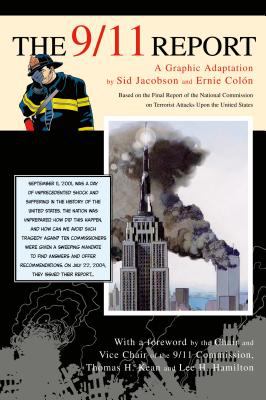
Jacobson, Sid, and Ernie Colon. The 9/11 Report: A Graphic Adaptation. New York: Hill and Wang, 2006.
Summary:
Jacobson and Colon have taken the report produced by the National Commission on Terrorist Attacks Upon the United States, and made it into a graphic novel. This was done so that the report could be put into a format that adults and young adults would be more likely to read and understand. This adaptation takes the reader from events leading to the terrorists' plan to attack the United States, to an analysis and recommendations for improvement of response of the government to the attacks.
My Impressions:
While not typically a fan of graphic novels, this one is an engrossing read. Jacobson and Colon have done an excellent job of presenting the facts from the official report in such a way that people will be more likely to read and understand the events of that day. The illustrations are typical of graphic novels, and therefore illustrate what the text states. The majority text used is taken from the report directly, but is presented in the form of dialogue along with illustrations which aid in the understanding of the report. The book is interesting and informs the reader in a way that a dry government report never could. This format of presenting a historical event, if it is as well done as this book, could be a new method of making history interesting to students.
Suggestions for the use of this book:
This book could be used in a history lesson on the events of September 11th, especially as the generation of children who were either to young to understand and remember the events of that day or weren't born yet, grow up and begin learning about this in school. This would be a good read for students, as it is factual and presented in a format that they enjoy.
Reviews:
Kral, Steven. Review of The 9/11 Report: A Graphic Adaptation, by Sid Jacobson and Ernie Colon. Voice of Youth Advocates, June 1, 2007.
The 9/11 Commission Report on the events of that day weighs in at a formidable eight hundred pages of small text. Developed with the blessing and support of the Commission, this volume condenses the eight-hundred-page report and uses the graphic novel format both to streamline the retelling of events and to enable the report to reach a new audience. The book begins by retelling what happened that morning and then details what factors led to the attack. It ends with a series of recommendations to prevent the recurrence of similar events in the future. Although a September 11 comic book might not sound like a good idea, this book does a great job in making the report accessible. The format enables the reader to understand how synchronous events thousands of miles away from each other combined to devastating results. The majority of the text is taken from the report and is largely used for narration or documented remarks. Text that is not from the report is used for dramatic effect and is readily apparent. It does, however, require active participation from the reader to fit the pieces together. It follows the report's structure, rather than providing a chronological narrative. This technique tends occasionally to force the reader to flip back a few pages to remember who was who. Although this problem might cut down on its appeal, students looking for an accessible way to approach the 9/11 Report will seek out this book.
Goldsmith, Francisca. Review of The 9/11 Report: A Graphic Adaptation, by Sid Jacobson and Ernie Colon. School Library Journal, December 1, 2006.
At only 15 percent the size of The 9/11 Report: The National Commission on Terrorist Attacks upon the United States (St. Martin's, 2004) and more than four times the price, is this adaptation worth purchasing? The answer is an unequivocal yes. Jacobson and Col-n intend this adaptation to bring to the commission's report readers who would not or could not digest its nearly 800 pages, and they have the blessing, acknowledged in this book's foreword, of the commission's chair and vice-chair to do so. Neither lurid nor simplistic, it presents the essence of the commission's work in a manner that, especially in the opening section, is able to surpass aspects of any text-only publication: the four stories of the doomed flights are given on the same foldout pages so that readers can truly grasp the significance of how simultaneous events can and did overwhelm our national information and defense systems. The analysis that follows in the subsequent 11 chapters cuts cleanly to the kernels of important history, politics, economics, and procedural issues that both created and exacerbated the effects of the day's events. Col-n's full-color artwork provides personality for the named players-U.S. presidents and Al-Qaeda operatives alike-as well as the airline passengers, office workers, fire fighters, and bureaucrats essential to the report. This graphic novel has the power and accessibility to become a high school text; in the meantime, no library should be without it.
Wednesday, April 27, 2011
Monday, April 18, 2011
Module 12: The Burn Journals
Citation:
Runyon, Brent. The Burn Journals. New York: Alfred A. Knopf, 2004.
Summary:
The Burn Journals is an account of the author's suicide attempt, and his subsequent recovery. Brent attempted to take his own life by setting himself on fire, and as a result suffers burns to 85 % of his body. After his attempt, he spends months in a burn recovery unit of a hospital during which he undergoes several surgeries to replace skin that had been burned. After this he goes to two different rehabilitation centers, one for physical recovery and the other for his mental recovery, after which he is to go back into high school. This book is from the point of view of the author and provides insight into his mind as he goes through this part of his life. The book takes the reader through the pain of therapy, discussions with Brent's family and nurses, as well as the thoughts in Brent's mind.
My Impressions:
This is a book that presents a very difficult subject in a straightforward manner without any avoidance of possibly difficult subjects. I believe that young adult readers will appreciate this book because it is from the point of view of a teenager, who must face the problems that every other teenager faces. It also discusses a real suicide attempt and the effect that it has on those involved. Through this book, the reader gains a better insight into the mind of a teenager with emotional problems. This book, from the point of view of a teenager who suffered a real suicide attempt, will speak to troubled teenagers more so than any teacher or parent can.
Suggestions for the use of this book:
This would be a good book to recommend to a troubled teenager, or during lessons on suicide prevention.
Reviews:
Lewis, Johanna. Review of The Burn Journals, by Brent Runyon. School Library Journal, November 1, 2004.
One February day in 1991, Runyon came home from eighth grade, had a snack, soaked his full-length bathrobe in gasoline, and set himself on fire. He intended to kill himself. Everything shortly after is written in short bursts as the author takes readers in and out of his various states of consciousness: the helicopter ride; the parade of nurses, doctors, therapists, and orderlies at Children's Hospital in Washington, DC, and the regimented details of his care divided among them; and the pain of the burns on 85 percent of his body. The entries lengthen and the story builds like a novel as the author takes readers along as co-patients. The dialogue between Runyon and his nurses, parents, and especially his hapless psychotherapists is natural and believable, and his inner dialogue is flip, often funny, and sometimes raw. The details of the surgery, therapy, and painstaking care that go into healing burns are fascinating, and are likely to grip teens with a taste for gore or melodrama. Runyon's brave willingness to relive this horrifying year in unflinching detail is perhaps even more fascinating, as is the slowly unfolding mystery of the sadness that made a smart, popular, funny, loving boy try to take his own life. Depression, regret, and rebirth are the themes that tie the narrative together, and the subtle tension among the three are beautifully related, offering no neat resolution. The authentically adolescent voice of the journals will engage even those reluctant to read such a dark story.
Review of The Burn Journals, by Brent Runyon. Publisher's Weekly, October 11, 2004.
Engrossing from first page to last, this book based on Runyon's own adolescent experiences draws readers into the world of an eighth-grader whose life is irrevocably changed the day he deliberately sets himself on fire. Brent, after narrowly escaping death, wakes up in a hospital with 85% of his body severely burned and begins a slow, arduous path to recovery. Rather than analyzing reasons the patient wanted to kill himself, the first-person narrative remains focused on the immediate challenge of survival, incorporating meticulous details of Brent's day-to-day ordeals in the hospital and later in a rehabilitation center. Time, at first, is measured by Brent's fluctuating levels of discomfort and comfort, ranging from the excruciating pain of having bandages removed to the sheer bliss of tasting ice cream for the first time in several weeks. And his repentant apologies to his parents and to Craig, his brother, who discovers Brent immediately after the incident, are wrenching in their honesty ("I hope Craig can love me again"). When his wounds begin to heal, Brent's thoughts turn from the present to the future as he nervously makes plans to return home and re-enter society. Despite its dark subject matter, this powerful chronicle of Brent's journey to heal expresses hope, celebrates life and provides an opportunity to slip inside the skin of a survivor with a unique perspective.
Runyon, Brent. The Burn Journals. New York: Alfred A. Knopf, 2004.
Summary:
The Burn Journals is an account of the author's suicide attempt, and his subsequent recovery. Brent attempted to take his own life by setting himself on fire, and as a result suffers burns to 85 % of his body. After his attempt, he spends months in a burn recovery unit of a hospital during which he undergoes several surgeries to replace skin that had been burned. After this he goes to two different rehabilitation centers, one for physical recovery and the other for his mental recovery, after which he is to go back into high school. This book is from the point of view of the author and provides insight into his mind as he goes through this part of his life. The book takes the reader through the pain of therapy, discussions with Brent's family and nurses, as well as the thoughts in Brent's mind.
My Impressions:
This is a book that presents a very difficult subject in a straightforward manner without any avoidance of possibly difficult subjects. I believe that young adult readers will appreciate this book because it is from the point of view of a teenager, who must face the problems that every other teenager faces. It also discusses a real suicide attempt and the effect that it has on those involved. Through this book, the reader gains a better insight into the mind of a teenager with emotional problems. This book, from the point of view of a teenager who suffered a real suicide attempt, will speak to troubled teenagers more so than any teacher or parent can.
Suggestions for the use of this book:
This would be a good book to recommend to a troubled teenager, or during lessons on suicide prevention.
Reviews:
Lewis, Johanna. Review of The Burn Journals, by Brent Runyon. School Library Journal, November 1, 2004.
One February day in 1991, Runyon came home from eighth grade, had a snack, soaked his full-length bathrobe in gasoline, and set himself on fire. He intended to kill himself. Everything shortly after is written in short bursts as the author takes readers in and out of his various states of consciousness: the helicopter ride; the parade of nurses, doctors, therapists, and orderlies at Children's Hospital in Washington, DC, and the regimented details of his care divided among them; and the pain of the burns on 85 percent of his body. The entries lengthen and the story builds like a novel as the author takes readers along as co-patients. The dialogue between Runyon and his nurses, parents, and especially his hapless psychotherapists is natural and believable, and his inner dialogue is flip, often funny, and sometimes raw. The details of the surgery, therapy, and painstaking care that go into healing burns are fascinating, and are likely to grip teens with a taste for gore or melodrama. Runyon's brave willingness to relive this horrifying year in unflinching detail is perhaps even more fascinating, as is the slowly unfolding mystery of the sadness that made a smart, popular, funny, loving boy try to take his own life. Depression, regret, and rebirth are the themes that tie the narrative together, and the subtle tension among the three are beautifully related, offering no neat resolution. The authentically adolescent voice of the journals will engage even those reluctant to read such a dark story.
Review of The Burn Journals, by Brent Runyon. Publisher's Weekly, October 11, 2004.
Engrossing from first page to last, this book based on Runyon's own adolescent experiences draws readers into the world of an eighth-grader whose life is irrevocably changed the day he deliberately sets himself on fire. Brent, after narrowly escaping death, wakes up in a hospital with 85% of his body severely burned and begins a slow, arduous path to recovery. Rather than analyzing reasons the patient wanted to kill himself, the first-person narrative remains focused on the immediate challenge of survival, incorporating meticulous details of Brent's day-to-day ordeals in the hospital and later in a rehabilitation center. Time, at first, is measured by Brent's fluctuating levels of discomfort and comfort, ranging from the excruciating pain of having bandages removed to the sheer bliss of tasting ice cream for the first time in several weeks. And his repentant apologies to his parents and to Craig, his brother, who discovers Brent immediately after the incident, are wrenching in their honesty ("I hope Craig can love me again"). When his wounds begin to heal, Brent's thoughts turn from the present to the future as he nervously makes plans to return home and re-enter society. Despite its dark subject matter, this powerful chronicle of Brent's journey to heal expresses hope, celebrates life and provides an opportunity to slip inside the skin of a survivor with a unique perspective.
Monday, April 11, 2011
Module 11: George Washington's Teeth
Citation:
Chandra, Deborah and Madeleine Comora. George Washington's Teeth. New York: Farrar Straus Giroux, 2003.
Summary:
This is a fun story, told in verse, about the life long problems that George Washington had with his teeth. The story recounts his loss of teeth through the Revolutionary war through having false teeth made from hippo tusks as president, with amusing illustrations to capture each part of the tale. After the story, there is a timeline of George Washington's life that will give young readers knowledge about the president, and about his real tooth problems.
My Impressions:
This is a very creative way to tell the story of one of the aspects of George Washington's life. While the topic of someone's teeth could be considered by most to be uninteresting, Washington is such a large figure in American history that the legend of his false teeth have carried on through the years. This story does an excellent job of portraying fact in a fun way. The funny verse along with the amusing illustrations provide the reader with the overall story of Washington's dental issues, but also provides the reader with entertainment. In addition, the timeline of Washington's life at the end of the book also provides the reader with reinforcement and context for the story.
Suggestions for the use of this book:
This book could be used in a lesson on George Washington, or it could be used in a lesson or storytime about dental hygiene.
Reviews:
Zvirin, Stephanie. Review of George Washington's Teeth, by Deborah Chandra and Madeleine Comora. Booklist, January 15, 2003.
Second only to kids' curiosity about George Washington and the cherry tree may be their interest in his teeth. Did the prez wear wooden dentures? Chandra and Comora set the record straight with wit, verve, and a generous amount of sympathy for poor Washington and his dental woes. Unfurling smoothly against a backdrop of Washington's career as soldier and president, the tale goes forward in sprightly, read-aloud rhyme that never falters: "Poor George has two teeth in his mouth / The day the votes came in. / The people had a President /But one afraid to grin." And illustrator Cole is at his absolute best here, totally at ease with human gesture and expression. Each spread is a tableaulike scene (or scenes) filled with costumed characters busily engaged in humorously visualizing the actual history. The color palette and energy of the art harks back to Cole's Buttons (1999), but there's much more detail and movement in these pictures, which work well as amusing preparation for the more sedately illustrated, annotated time line of George's dental decay that precedes a full roundup of historical sources the authors used in telling the tale. This is history for youngsters that will stick; it's wild and fun and factual, without a trace of mockery.
Review of George Washington's Teeth, by Deborah Chandra and Madeleine Comora. Publisher's Weekly, December 2, 2002.
In a clever approach to history, Chandra and Comora string together spry stanzas describing the dental difficulties that plagued George Washington. Rhyming verse explains how the general's rotten teeth gradually fall out during the Revolutionary War: "George crossed the icy Delaware/ With nine teeth in his mouth./ In that cold and pitchy dark,/ Two more teeth came out!" Cole complements this verse by rendering a sly watercolor twist on Emanuel Leutze's famous painting George Washington Crossing the Delaware, in a full-spread treatment: Washington still stands in quiet dignity, but the boatmen are grinning. By the time Washington is elected president, just two teeth remain in his mouth. Kids will love the details, such as the way Washington uses a pair of his molars to fashion a mold from which the dentist makes a set of dentures (these are carved from hippopotamus ivory, and even shown, in a photograph in the afterword). Infusing his bustling watercolor vignettes with comic hyperbole, Cole easily keeps pace with the lighthearted narrative. One especially funny image shows the president sprawled on the floor, legs in the air, after viewing a newly painted portrait ("George stood up to have a look-/ He fell back on his fanny./ `It doesn't look like me!' he roared./ `It looks like Martha's granny!' "). An annotated timeline at the end includes quotes from the leader's letters and diaries chronicling his relentless efforts to hide his dental problems and the extent to which they caused him chronic pain and embarrassment. A highly palatable historical morsel.
Chandra, Deborah and Madeleine Comora. George Washington's Teeth. New York: Farrar Straus Giroux, 2003.
Summary:
This is a fun story, told in verse, about the life long problems that George Washington had with his teeth. The story recounts his loss of teeth through the Revolutionary war through having false teeth made from hippo tusks as president, with amusing illustrations to capture each part of the tale. After the story, there is a timeline of George Washington's life that will give young readers knowledge about the president, and about his real tooth problems.
My Impressions:
This is a very creative way to tell the story of one of the aspects of George Washington's life. While the topic of someone's teeth could be considered by most to be uninteresting, Washington is such a large figure in American history that the legend of his false teeth have carried on through the years. This story does an excellent job of portraying fact in a fun way. The funny verse along with the amusing illustrations provide the reader with the overall story of Washington's dental issues, but also provides the reader with entertainment. In addition, the timeline of Washington's life at the end of the book also provides the reader with reinforcement and context for the story.
Suggestions for the use of this book:
This book could be used in a lesson on George Washington, or it could be used in a lesson or storytime about dental hygiene.
Reviews:
Zvirin, Stephanie. Review of George Washington's Teeth, by Deborah Chandra and Madeleine Comora. Booklist, January 15, 2003.
Second only to kids' curiosity about George Washington and the cherry tree may be their interest in his teeth. Did the prez wear wooden dentures? Chandra and Comora set the record straight with wit, verve, and a generous amount of sympathy for poor Washington and his dental woes. Unfurling smoothly against a backdrop of Washington's career as soldier and president, the tale goes forward in sprightly, read-aloud rhyme that never falters: "Poor George has two teeth in his mouth / The day the votes came in. / The people had a President /But one afraid to grin." And illustrator Cole is at his absolute best here, totally at ease with human gesture and expression. Each spread is a tableaulike scene (or scenes) filled with costumed characters busily engaged in humorously visualizing the actual history. The color palette and energy of the art harks back to Cole's Buttons (1999), but there's much more detail and movement in these pictures, which work well as amusing preparation for the more sedately illustrated, annotated time line of George's dental decay that precedes a full roundup of historical sources the authors used in telling the tale. This is history for youngsters that will stick; it's wild and fun and factual, without a trace of mockery.
Review of George Washington's Teeth, by Deborah Chandra and Madeleine Comora. Publisher's Weekly, December 2, 2002.
In a clever approach to history, Chandra and Comora string together spry stanzas describing the dental difficulties that plagued George Washington. Rhyming verse explains how the general's rotten teeth gradually fall out during the Revolutionary War: "George crossed the icy Delaware/ With nine teeth in his mouth./ In that cold and pitchy dark,/ Two more teeth came out!" Cole complements this verse by rendering a sly watercolor twist on Emanuel Leutze's famous painting George Washington Crossing the Delaware, in a full-spread treatment: Washington still stands in quiet dignity, but the boatmen are grinning. By the time Washington is elected president, just two teeth remain in his mouth. Kids will love the details, such as the way Washington uses a pair of his molars to fashion a mold from which the dentist makes a set of dentures (these are carved from hippopotamus ivory, and even shown, in a photograph in the afterword). Infusing his bustling watercolor vignettes with comic hyperbole, Cole easily keeps pace with the lighthearted narrative. One especially funny image shows the president sprawled on the floor, legs in the air, after viewing a newly painted portrait ("George stood up to have a look-/ He fell back on his fanny./ `It doesn't look like me!' he roared./ `It looks like Martha's granny!' "). An annotated timeline at the end includes quotes from the leader's letters and diaries chronicling his relentless efforts to hide his dental problems and the extent to which they caused him chronic pain and embarrassment. A highly palatable historical morsel.
Sunday, April 3, 2011
Module 10: Al Capone Does My Shirts
Citation:
Choldenko, Gennifer. Al Capone Does My Shirts. New York: G.P. Putnam's Sons, 2004.
Summary:
This book recounts the story of Matthew "Moose" Flanagan, who moves with his family to Alcatraz island and prison when his father gets a job as an electrician/prison guard in 1935. They move to Alcatraz in order for his sister, Natalie, to attend a special school. Natalie is autistic, althought they don't have a word for that in 1935. Moose is generally annoyed by his sister and the way in which his mother put Natalie through many different "treatments" in an attempt to cure her of her special condition. While on the island, Moose makes friends with the children of other prison guards on the island. He also meets Piper, the warden's daughter, who hatches a scheme to make money by charging the students at their school, and then taking their shirts to be washed in the prison laundry where Al Capone works. This stunt gets all of the children in trouble, but in the end it gives Moose an idea of where to go for help when his sister is rejected from the special school.
My Impressions:
This book is a wonderful story about a boy who is put into an unusual living situation, and how he views his relationship with his sister. The story is historical fiction, and does present facts accurately, although the characters of the story are fictitious, except for Al Capone and other historical characters listed. Choldenko includes, in an author's note at the end of the book, a short history of Alcatraz and which elements of her story were true and which were fictitious. In addition, she includes information about Moose's sister Natalie, and the disability of autism. This level of research and dedication allows the reader to experience vicariously what life on Alcatraz island would have been like for a fourteen year old child of a prison guard. In addition, the children will gain factual knowledge through the author's note at the end. Also, children who have never experienced autism, will gain an understanding of the frutstration involved for those associated with the autistic person as well as what the disability does to a person.
Suggestions for the use of this book:
This book could be used in a lesson involving autism, or a history lesson on Alcatraz and crime in the 1930s.
Reviews:
Hogan, Walter. Review of Al Capone Does My Shirts, by Gennifer Choldenko. Voice of Youth Advocates, April 1, 2004.
In 1935, notorious gangster Al Capone is one of three hundred convicts housed in the maximum-security penitentiary on Alcatraz Island. Twelve-year-old Moose Flanagan also lives on the island. His father has taken a position as an electrician and guard at the prison in hopes that Moose's sister, Natalie, will be accepted at a special school in nearby San Francisco. Not only has Moose been forced to leave friends behind and move with his family to a fortress island, but he also cannot play baseball or make new friends now because he is stuck taking care of his sister whenever he is not in school. Natalie is afflicted with the condition now known as autism, and even at age sixteen, she cannot be left unsupervised. Everyone in the family has been under a strain because of Natalie's special needs. Meanwhile Piper, the warden's pretty, spoiled daughter, makes life complicated for Moose. The island's residents have their laundry done by the convicts, and thrill-seeking Piper drags Moose into her wild stunt of marketing Al Capone's laundry services to their middle school classmates in San Francisco. But when his family desperately needs a break in their efforts to get help for Natalie, Moose knows that only Piper has the connections and the audacity to help him pull off a reckless scheme involving the island's most famous inmate. Choldenko, author of Notes from a Liar and Her Dog (Putnam's, 2001/VOYA August 2001), weaves three As-Alcatraz, Al Capone, and autism-into an excellent historical novel for middle-grade readers. A large, annotated 1935 photograph of Alcatraz Island and an informative author's note give substance to the novel's factual sources.
Review of Al Capone Does My Shirts, by Gennifer Choldenko. Publisher's Weekly, February 2, 2004.
Set on Alcatraz Island in 1935, Choldenko's (Notes from a Liar and Her Dog) exceptionally atmospheric novel has equally unusual characters and plot lines. Twelve-year-old narrator Moose Flanagan has just moved to the island, where his father has been hired as an electrician and guard. At first Moose is spooked at being in such close proximity to the nation's most notorious criminals, and he doesn't know what to make of the all-powerful warden's bossy daughter, Piper, who flouts her father's rule about talking about the convicts ("You say [Al Capone's] name and hordes of reporters come crawling out of the woodwork ready to write stories full of foolish lies," the warden explains). At school, on the mainland, Piper hatches a scheme to make money from classmates ("Once in a lifetime opportunity! Get your clothes laundered by Al Capone and other world-famous public enemies!... Only costs 5 cents") and forces Moose to help her. Moose has reasons for staying on Piper's good side: his older sister, Natalie, has what would now be called autism, and Moose worries that her behavior will land the family in trouble with the warden. (Natalie's condition is so poorly understood that an expert tells her desperate mother, "An interesting case... you should consider donating her brain to science when she dies.") Choldenko captures the tense, nuanced family dynamics touched off by Natalie's disability as skillfully as she handles the mystique of Alcatraz and the exchanges between Moose and his friends. Fast-paced and memorable.
Choldenko, Gennifer. Al Capone Does My Shirts. New York: G.P. Putnam's Sons, 2004.
Summary:
This book recounts the story of Matthew "Moose" Flanagan, who moves with his family to Alcatraz island and prison when his father gets a job as an electrician/prison guard in 1935. They move to Alcatraz in order for his sister, Natalie, to attend a special school. Natalie is autistic, althought they don't have a word for that in 1935. Moose is generally annoyed by his sister and the way in which his mother put Natalie through many different "treatments" in an attempt to cure her of her special condition. While on the island, Moose makes friends with the children of other prison guards on the island. He also meets Piper, the warden's daughter, who hatches a scheme to make money by charging the students at their school, and then taking their shirts to be washed in the prison laundry where Al Capone works. This stunt gets all of the children in trouble, but in the end it gives Moose an idea of where to go for help when his sister is rejected from the special school.
My Impressions:
This book is a wonderful story about a boy who is put into an unusual living situation, and how he views his relationship with his sister. The story is historical fiction, and does present facts accurately, although the characters of the story are fictitious, except for Al Capone and other historical characters listed. Choldenko includes, in an author's note at the end of the book, a short history of Alcatraz and which elements of her story were true and which were fictitious. In addition, she includes information about Moose's sister Natalie, and the disability of autism. This level of research and dedication allows the reader to experience vicariously what life on Alcatraz island would have been like for a fourteen year old child of a prison guard. In addition, the children will gain factual knowledge through the author's note at the end. Also, children who have never experienced autism, will gain an understanding of the frutstration involved for those associated with the autistic person as well as what the disability does to a person.
Suggestions for the use of this book:
This book could be used in a lesson involving autism, or a history lesson on Alcatraz and crime in the 1930s.
Reviews:
Hogan, Walter. Review of Al Capone Does My Shirts, by Gennifer Choldenko. Voice of Youth Advocates, April 1, 2004.
In 1935, notorious gangster Al Capone is one of three hundred convicts housed in the maximum-security penitentiary on Alcatraz Island. Twelve-year-old Moose Flanagan also lives on the island. His father has taken a position as an electrician and guard at the prison in hopes that Moose's sister, Natalie, will be accepted at a special school in nearby San Francisco. Not only has Moose been forced to leave friends behind and move with his family to a fortress island, but he also cannot play baseball or make new friends now because he is stuck taking care of his sister whenever he is not in school. Natalie is afflicted with the condition now known as autism, and even at age sixteen, she cannot be left unsupervised. Everyone in the family has been under a strain because of Natalie's special needs. Meanwhile Piper, the warden's pretty, spoiled daughter, makes life complicated for Moose. The island's residents have their laundry done by the convicts, and thrill-seeking Piper drags Moose into her wild stunt of marketing Al Capone's laundry services to their middle school classmates in San Francisco. But when his family desperately needs a break in their efforts to get help for Natalie, Moose knows that only Piper has the connections and the audacity to help him pull off a reckless scheme involving the island's most famous inmate. Choldenko, author of Notes from a Liar and Her Dog (Putnam's, 2001/VOYA August 2001), weaves three As-Alcatraz, Al Capone, and autism-into an excellent historical novel for middle-grade readers. A large, annotated 1935 photograph of Alcatraz Island and an informative author's note give substance to the novel's factual sources.
Review of Al Capone Does My Shirts, by Gennifer Choldenko. Publisher's Weekly, February 2, 2004.
Set on Alcatraz Island in 1935, Choldenko's (Notes from a Liar and Her Dog) exceptionally atmospheric novel has equally unusual characters and plot lines. Twelve-year-old narrator Moose Flanagan has just moved to the island, where his father has been hired as an electrician and guard. At first Moose is spooked at being in such close proximity to the nation's most notorious criminals, and he doesn't know what to make of the all-powerful warden's bossy daughter, Piper, who flouts her father's rule about talking about the convicts ("You say [Al Capone's] name and hordes of reporters come crawling out of the woodwork ready to write stories full of foolish lies," the warden explains). At school, on the mainland, Piper hatches a scheme to make money from classmates ("Once in a lifetime opportunity! Get your clothes laundered by Al Capone and other world-famous public enemies!... Only costs 5 cents") and forces Moose to help her. Moose has reasons for staying on Piper's good side: his older sister, Natalie, has what would now be called autism, and Moose worries that her behavior will land the family in trouble with the warden. (Natalie's condition is so poorly understood that an expert tells her desperate mother, "An interesting case... you should consider donating her brain to science when she dies.") Choldenko captures the tense, nuanced family dynamics touched off by Natalie's disability as skillfully as she handles the mystique of Alcatraz and the exchanges between Moose and his friends. Fast-paced and memorable.
Sunday, March 27, 2011
Module 9: The Postcard
Citation:
Abbott, Tony. The Postcard. New York: Little, Brown and Company, 2008.
Summary:
Jason Huff, a teenager living in Boston, has to leave all of the sudden for St. Petersburg, Florida due to the death of his grandmother. He goes to join his father for the funeral and then the packing of his grandmother's house in order to sell it. Jason is less than thrilled about his arrival in Florida, until strange events begin to happen. He discovers an old magazine with the first installment of an adventure story, then a postcard which leads him to the second installment, until the whole ordeal turns into an adventure involving the mysterious identity of Jason's grandfather, a secret society, and the ultimate discovery of who Jason's grandmother was.
My Impressions:
This book does an excellent job of providing a suspenseful story that keeps the reader interested through the very end. The main character, Jason, is a typical teenage who can be easility identified with by any teenage boy who is forced into something he does not want to do. The plot of the story is excellently written through by providing a mystery within a mystery, and combing the past with the present. In addition, the characterization is a mix of normal and unusual, although all of the characters are so well portrayed that the story is easy to believe. The excellent writing style, and the realistic setting and characterization combine into a great story that will be a fun read for any teenager who enjoys a mystery.
Suggestions for the use of this book:
This book could be used in conjunction with a history lesson that involves researching one's family. In addition, this book is an excellent choice for any middle school age child who enjoys a mystery, since it lacks violence or gore.
Reviews:
Baker, Lisa W. Review of The Postcard, by Tony Abbott. School Library Journal, April 1, 2008.
"How smart are you?" Jason, a teenager helping his father sort through the belongings of his recently deceased grandmother, is asked this question by a mystery voice over the phone in this novel (Little, Brow, 2008) by Tony Abbott. An old, yellowed postcard provides the first clue in a hunt for long-hidden manuscripts that tell a continuing story of circus villains and true love, among other things. Jason also finds an old magazine with a story about someone named Marnie--a name the funeral director calls his grandmother Agnes. Jason and his sidekick Dia visit several of Florida's older landmarks to learn about his grandmother's hidden past. This is a story-within-a-story: Jason and Dia search for the hidden manuscript, and there are scene switches to the story of Nick Falcon and his beloved Marnie. How these two stories intertwine and end up at the same place is the best part of all. The excellent plot contains twists and turns around every corner, and the story is fast-paced with enough mystery and humor to keep the attention of listeners.
Clifford, Debbie. Review of The Postcard, by Tony Abbott. Voice of Youth Advocates, June 1, 2008.
Thirteen-year-old Jason is in Florida helping his father clean out his grandmother's house following her death. Jason never knew his grandmother and is only recently learning about her from his dad. When he finds a story in a 1940s-era magazine, some of the details are eerily similar to things he has just heard about his grandmother. The story tells of love at first sight for Marnie and Nick, but Marnie's powerful father keeps them apart. Could the rich, beautiful Marnie in the story really be Jason's grandmother? And who is Nick? The story ends abruptly, and the author's death notice appears in the next issue of the magazine. A mysterious phone call sends Jason in search of more chapters as it directs him to his grandmother's desk and an old, yellowed postcard containing clues to the location of the next chapter. Marnie and Nick's story unfolds as Jason follows clues and finds the succeeding chapters. The hunt helps Jason avoid facing the fact that his parents' marriage is crumbling and his father's drinking could be part of the problem. This book succeeds on many levels. Fans of romance and adventure will enjoy Nick and Marnie's story with its quirky characters. Jason's take on his unexpected summer adventure will engage readers who enjoy realistic fiction, especially his budding friendship with a neighborhood girl who joins him in tracking down the chapters. A less capable author could easily have confused readers with everything that is going on in this book, but Abbott weaves a fun, engaging tale that draws in readers and keeps them entertained.
Abbott, Tony. The Postcard. New York: Little, Brown and Company, 2008.
Summary:
Jason Huff, a teenager living in Boston, has to leave all of the sudden for St. Petersburg, Florida due to the death of his grandmother. He goes to join his father for the funeral and then the packing of his grandmother's house in order to sell it. Jason is less than thrilled about his arrival in Florida, until strange events begin to happen. He discovers an old magazine with the first installment of an adventure story, then a postcard which leads him to the second installment, until the whole ordeal turns into an adventure involving the mysterious identity of Jason's grandfather, a secret society, and the ultimate discovery of who Jason's grandmother was.
My Impressions:
This book does an excellent job of providing a suspenseful story that keeps the reader interested through the very end. The main character, Jason, is a typical teenage who can be easility identified with by any teenage boy who is forced into something he does not want to do. The plot of the story is excellently written through by providing a mystery within a mystery, and combing the past with the present. In addition, the characterization is a mix of normal and unusual, although all of the characters are so well portrayed that the story is easy to believe. The excellent writing style, and the realistic setting and characterization combine into a great story that will be a fun read for any teenager who enjoys a mystery.
Suggestions for the use of this book:
This book could be used in conjunction with a history lesson that involves researching one's family. In addition, this book is an excellent choice for any middle school age child who enjoys a mystery, since it lacks violence or gore.
Reviews:
Baker, Lisa W. Review of The Postcard, by Tony Abbott. School Library Journal, April 1, 2008.
"How smart are you?" Jason, a teenager helping his father sort through the belongings of his recently deceased grandmother, is asked this question by a mystery voice over the phone in this novel (Little, Brow, 2008) by Tony Abbott. An old, yellowed postcard provides the first clue in a hunt for long-hidden manuscripts that tell a continuing story of circus villains and true love, among other things. Jason also finds an old magazine with a story about someone named Marnie--a name the funeral director calls his grandmother Agnes. Jason and his sidekick Dia visit several of Florida's older landmarks to learn about his grandmother's hidden past. This is a story-within-a-story: Jason and Dia search for the hidden manuscript, and there are scene switches to the story of Nick Falcon and his beloved Marnie. How these two stories intertwine and end up at the same place is the best part of all. The excellent plot contains twists and turns around every corner, and the story is fast-paced with enough mystery and humor to keep the attention of listeners.
Clifford, Debbie. Review of The Postcard, by Tony Abbott. Voice of Youth Advocates, June 1, 2008.
Thirteen-year-old Jason is in Florida helping his father clean out his grandmother's house following her death. Jason never knew his grandmother and is only recently learning about her from his dad. When he finds a story in a 1940s-era magazine, some of the details are eerily similar to things he has just heard about his grandmother. The story tells of love at first sight for Marnie and Nick, but Marnie's powerful father keeps them apart. Could the rich, beautiful Marnie in the story really be Jason's grandmother? And who is Nick? The story ends abruptly, and the author's death notice appears in the next issue of the magazine. A mysterious phone call sends Jason in search of more chapters as it directs him to his grandmother's desk and an old, yellowed postcard containing clues to the location of the next chapter. Marnie and Nick's story unfolds as Jason follows clues and finds the succeeding chapters. The hunt helps Jason avoid facing the fact that his parents' marriage is crumbling and his father's drinking could be part of the problem. This book succeeds on many levels. Fans of romance and adventure will enjoy Nick and Marnie's story with its quirky characters. Jason's take on his unexpected summer adventure will engage readers who enjoy realistic fiction, especially his budding friendship with a neighborhood girl who joins him in tracking down the chapters. A less capable author could easily have confused readers with everything that is going on in this book, but Abbott weaves a fun, engaging tale that draws in readers and keeps them entertained.
Sunday, March 13, 2011
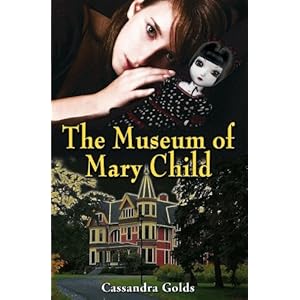
Module 8: The Museum of Mary Child
Citation:
Golds, Cassandra. The Museum of Mary Child. Tulsa, OK: Kane Miller, 2009.
Summary:
Heloise is a child being raised by her stern godmother in the caretaker's house of a museum which lies next door. Her days are strictly structured, and allow no room for fun or free time. She does not know love, the joys of Christmas, or the joys of playing with other children. One day, Heloise finds a doll underneath her floorboards, and develops a fondness for it. Her godmother, however, disapproves and decides to show Heloise the contents of the museum, which contains the disfigured faces of thousands of dolls sewn by Mary Child in her madness. Heloise, aided by a band of birds led by Merryfeathers, escapes from her godmother to be taken in by Old Mother who leads a choir of orphan girls. Heloise begins living a wonderful life, until Merryfeathers takes her to a prison, where she meets Sebastian. They develop a bond and find that they have a mutual connection with Mary Child. Heloise is suddenly found and called back to her godmother who is sick, where she discovers the truth about Mary Child, and the truth about herself.
My Impressions:
This book is a rather dark and strange book, although put together very well. The characters of the story are not developed with much detail, adding to the overall feeling of mystery about the book. In addition, the overall theme of love conquering all is well played throughout the book right through the end. The plot of the story moves along at a steady pace, not so slow that it is dull, but not so quick as to be a rapid page-turner. However, the mysterious air of the plot, the languague that seems to be from the nineteenth century, the fairy tale elements, and the satisfying ends make this book a worthwhile read, especially for females who will most likely receive more enjoyment out of it than males.
Suggestions for the use of this book:
This book is a powerful story and would be an excellent recommendation for any young adult who enjoys mystery. This book could also be used in a lesson on the gothic novel, as it contains many elements of a gothic novel.
Reviews:
Miller, Jessica. Review of The Museum of Mary Child, by Cassandra Golds. School Library Journal, December 1, 2009.
Heloise lives in an austere household with her godmother, always watched, always working, never wasting time. Her life is regimented into segments of work, study, and constitutionals. This is all that the girl knows, until she finds a doll under a loose floorboard in her bedroom. Suddenly her world changes as she discovers what it means to love, but the child knows to keep the toy hidden. When her godmother learns of its existence, she takes her to the Museum of Mary Child to demonstrate the folly and danger of keeping dolls. To the girl's horror, she discovers the place is a shrine to the dolls that a woman named Mary Child had once kept, defaced, and hidden as she slowly went mad. Overcome, Heloise runs away and is taken in by kind Old Mother who runs an all-female choir. There the girl begins to develop loving friendships. Her world is again turned upside down when she is taken by a flock of birds to meet a prisoner in the jail during the dark of night. After several visits to the prison, the two share their stories and discover a deep and intriguing connection between them and Mary Child. This story reads like a fairy tale with elements of mystery, romance, Gothic horror, fantasy, and all parts terrific. The atmosphere is wonderfully rendered, and the book quietly but dramatically draws readers to its conclusion.
Review of The Museum of Mary Child, by Cassandra Golds. Publisher's Weekly, September 28, 2009.
Gothic and wonderfully creepy, Golds's (Clair-de-Lune) atmospheric story delights, offering meditations on the nature and power of love. Lonely Heloise wants only to be loved, but lives as if jailed in the house of her stern and sometimes cruel godmother. One day Heloise uncovers a beautiful doll, Maria, hidden under the floorboards of her room, and it is love at first sight. Heloise hides Maria from her godmother, whose personal Ten Commandments include forbidding play, "pretty clothes" and the possession of a doll, not to mention never uttering the word love ("We are all of us evil. And to love something evil is wicked," she professes). Once Maria is discovered, Heloise finds out the horrible truth about the museum that adjoins her godmother's cottage and is thrust down a strange and magical path that reveals how sheltered she has been ("Most people, she now knew, had heard music. Most people had seen pictures"). Readers will wonder throughout: who is Heloise really-or better, what is she? Aside from an occasional tendency toward sentimental prose, Golds's novel is pure fun, filled with mystery and nearly impossible to put down.
Golds, Cassandra. The Museum of Mary Child. Tulsa, OK: Kane Miller, 2009.
Summary:
Heloise is a child being raised by her stern godmother in the caretaker's house of a museum which lies next door. Her days are strictly structured, and allow no room for fun or free time. She does not know love, the joys of Christmas, or the joys of playing with other children. One day, Heloise finds a doll underneath her floorboards, and develops a fondness for it. Her godmother, however, disapproves and decides to show Heloise the contents of the museum, which contains the disfigured faces of thousands of dolls sewn by Mary Child in her madness. Heloise, aided by a band of birds led by Merryfeathers, escapes from her godmother to be taken in by Old Mother who leads a choir of orphan girls. Heloise begins living a wonderful life, until Merryfeathers takes her to a prison, where she meets Sebastian. They develop a bond and find that they have a mutual connection with Mary Child. Heloise is suddenly found and called back to her godmother who is sick, where she discovers the truth about Mary Child, and the truth about herself.
My Impressions:
This book is a rather dark and strange book, although put together very well. The characters of the story are not developed with much detail, adding to the overall feeling of mystery about the book. In addition, the overall theme of love conquering all is well played throughout the book right through the end. The plot of the story moves along at a steady pace, not so slow that it is dull, but not so quick as to be a rapid page-turner. However, the mysterious air of the plot, the languague that seems to be from the nineteenth century, the fairy tale elements, and the satisfying ends make this book a worthwhile read, especially for females who will most likely receive more enjoyment out of it than males.
Suggestions for the use of this book:
This book is a powerful story and would be an excellent recommendation for any young adult who enjoys mystery. This book could also be used in a lesson on the gothic novel, as it contains many elements of a gothic novel.
Reviews:
Miller, Jessica. Review of The Museum of Mary Child, by Cassandra Golds. School Library Journal, December 1, 2009.
Heloise lives in an austere household with her godmother, always watched, always working, never wasting time. Her life is regimented into segments of work, study, and constitutionals. This is all that the girl knows, until she finds a doll under a loose floorboard in her bedroom. Suddenly her world changes as she discovers what it means to love, but the child knows to keep the toy hidden. When her godmother learns of its existence, she takes her to the Museum of Mary Child to demonstrate the folly and danger of keeping dolls. To the girl's horror, she discovers the place is a shrine to the dolls that a woman named Mary Child had once kept, defaced, and hidden as she slowly went mad. Overcome, Heloise runs away and is taken in by kind Old Mother who runs an all-female choir. There the girl begins to develop loving friendships. Her world is again turned upside down when she is taken by a flock of birds to meet a prisoner in the jail during the dark of night. After several visits to the prison, the two share their stories and discover a deep and intriguing connection between them and Mary Child. This story reads like a fairy tale with elements of mystery, romance, Gothic horror, fantasy, and all parts terrific. The atmosphere is wonderfully rendered, and the book quietly but dramatically draws readers to its conclusion.
Review of The Museum of Mary Child, by Cassandra Golds. Publisher's Weekly, September 28, 2009.
Gothic and wonderfully creepy, Golds's (Clair-de-Lune) atmospheric story delights, offering meditations on the nature and power of love. Lonely Heloise wants only to be loved, but lives as if jailed in the house of her stern and sometimes cruel godmother. One day Heloise uncovers a beautiful doll, Maria, hidden under the floorboards of her room, and it is love at first sight. Heloise hides Maria from her godmother, whose personal Ten Commandments include forbidding play, "pretty clothes" and the possession of a doll, not to mention never uttering the word love ("We are all of us evil. And to love something evil is wicked," she professes). Once Maria is discovered, Heloise finds out the horrible truth about the museum that adjoins her godmother's cottage and is thrust down a strange and magical path that reveals how sheltered she has been ("Most people, she now knew, had heard music. Most people had seen pictures"). Readers will wonder throughout: who is Heloise really-or better, what is she? Aside from an occasional tendency toward sentimental prose, Golds's novel is pure fun, filled with mystery and nearly impossible to put down.
Sunday, March 6, 2011
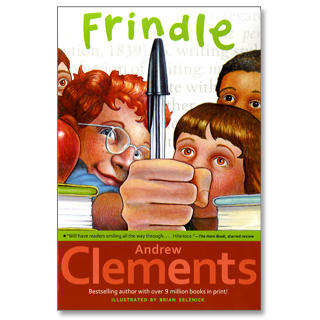
Module 7: Frindle and Son of the Mob
Citation:
Clements, Andrew. Frindle. New York: Simon & Schuster, 1996.
Summary:
Frindle recounts the story of Nick Allen, a student at Lincoln Elementary School, who decides to see if he can create his own word. His Language Arts teacher, Mrs. Granger, tells the class that words have meanings because people say that they do. Nick Allen puts this to the test by beginning to call pens, frindles. This puts him at odd with his teacher, but gains him the support of the rest of the school and eventually gains nationwide attention. Nick Allen later finds out that, even though she appeared to be against him, Mrs. Granger was supportive of Nick's efforts to create a new word.
My Impressions:
This is an excellent book that speaks to children of pre-Middle School age. The book gives support to children who may not necessarily fit into the common mold with their ideas and imagination. The book is well written, and gives young children the idea that they are able to accomplish something if they try, and that having an imagination is not a bad thing.
Suggestions for the use of this book:
This book could be used in a lesson on the etymology of different words. This is an excellent example of the way in which words are created. This book could also be used by a parent to explain to a child why they do not necessarily get along with their teacher.
Reviews
Review of Frindle, by Andrew Clements. Publisher's Weekly, July 15, 1996.
Always one step ahead of his teachers, Nick not only can "feel a homework assignment coming the way a farmer can feel a rainstorm" but can dream up a distraction to prevent the assignment from being given. In fifth grade, however, he meets his match in tough language-arts teacher Mrs. Granger. Just to get under her skin?nd despite her loud protests?e invents the word "frindle" and convinces the whole school to use it instead of the word "pen." The word spreads to the city, nation and world, and Clements (Big Al) fast-forwards the story by 10 years to show that "frindle" has made it into the dictionary. With this coup Nick gets a big surprise: the proof that Mrs. Granger was rooting for "frindle" all along. Like the Velveteen Rabbit, his well-worn word has become real. Dictionary lovers will cotton to this mild classroom fantasy, while readers who have a hard time believing that one person could invent a word out of thin air will be surprised to learn that the word "quiz" was invented the same way.
Mitnick, Fritz. Review of Frindle, by Andrew Clements. School Library Journal, December 1, 1998.
Nick, a clever fifth grade students, is determined to outsmart his no-nonsense, dictionary-loving teacher, Mrs. Granger. When he invents "Frindle," a new word for pen, he manages to get fellow students and shopkeepers to use the word. Annoyed, Mrs. Granger keeps students who use the new word after school. The war over the word escalates, and first local and then national media pick up the story. Marketing rights to tie-ins (such as pens marked "Frindle") make Nick very wealthy. Ten years later, Nick and Mrs. Granger again correspond when the word "Frindle" is admitted to Mrs. Granger's favorite dictionary. Andrew Clements' story (S&S, 1996) is a fresh take on the classic student-teacher relationship.
Citation:
Korman, Gordon. Son of the Mob. New York: Hyperion, 2002.
Summary:
Vince Luca is a high school student who is the son of a mob boss. Vince, however, has no desire to join the family business, and goes out of his way to avoid "the life." However, Vince's life becomes complicated when he begins dating the daughter of the FBI agent who has the Luca house bugged and under surveillance. Vince also, inadvertantly, gets involved with some of the family's business dealings and winds up in a mess. Vince must maintain his relationship with his family, and his relationship with his girlfriend at the same time, which leads to many complications and ultimately Vince has to compromise.
My Impressions:
This book holds many elements of the reality of being a teenager, including stressful relationships with parents, first love, and striving for independence. This book does an excellent job of placing a teenager into an uncommon situation. While teenage readers will be able to identify with the character of Vince Luca, they will also enjoy the unique situations that he is put into due to his family's connection with the mob. The unique plot, and the realistic dialogue makes this book an excellent choice for young adult readers.
Suggestions for the use of this book:
This would be an excellent book to recommend to a teenage boy who is searching for something to read, particularly if they have trouble understanding Shakespeare's Romeo and Juliet or if they enjoy movies such as the Godfather or TV shows such as the Sopranos.
Reviews
Carstensen, Angela. Review of Son of the Mob, by Gordon Korman. Voice of Youth Advocates, February 1, 2003.
Vince Luca is a recognizable modern teenager-fast-talking, unmotivated, and down on what his father does for a living. When one's dad is the leader of organized crime in New York, living an independent life is a challenge. Although Vince is determined to stay completely separate from the family business, it somehow interferes with every aspect of his senior year, from playing football to homework projects. When Vince falls for Kendra, the daughter of the FBI agent gathering evidence against his father, their relationship seems doomed from the start. Several questions keep the reader hooked. Will Kendra find out why Vince avoids meeting her parents? Will their parents catch them together? What happens if her father succeeds? Is there an FBI mole in the Luca operations? Who ordered the shooting of Mr. Luca's rival? What makes the story work is the hip, young voice of the protagonist. Vince is well aware of the absurdity of his situation and has a wonderfully dry sense of humor. His genuine struggle to find his own way in the face of family influences is appealing and grounds the story. Although this book will be most popular with the junior high crowd, older students who appreciate humorous writing will enjoy the clever twist on a Romeo-and-Juliet relationship. The popularity of HBO's The Sopranos should also serve to increase its audience.
Peters, John. Review of Son of the Mob, by Gordon Korman. Booklist, November 1, 2002.
The Sopranos meets Romeo and Juliet in this briskly comic romance, costarring a crime kingpin's son and an FBI agent's daughter. Tony and Kendra are mad for each other, but that doesn't mean that Tony is ready to tell Kendra who his father is--especially after his horrifying discovery that her father is on the listening end of the bugs and wiretaps scattered through his house. Realizing that it wouldn't be wise for either dad to find out what's what, Tony has to do some fancy footwork to keep the fathers, and Kendra's suspicions, at bay--a task considerably complicated by his unwilling involvement with a pair of petty hoodlums. Stubbornly battling to preserve his illusion that the family "business" has nothing to do with him, Tony presents a winning mix of good instincts and innocence that will have readers cheering him on as he weathers a succession of amatory and ethical crises, to emerge at the end of this expertly plotted escapade with relationships, self-respect, and even conscience more or less intact.
Clements, Andrew. Frindle. New York: Simon & Schuster, 1996.
Summary:
Frindle recounts the story of Nick Allen, a student at Lincoln Elementary School, who decides to see if he can create his own word. His Language Arts teacher, Mrs. Granger, tells the class that words have meanings because people say that they do. Nick Allen puts this to the test by beginning to call pens, frindles. This puts him at odd with his teacher, but gains him the support of the rest of the school and eventually gains nationwide attention. Nick Allen later finds out that, even though she appeared to be against him, Mrs. Granger was supportive of Nick's efforts to create a new word.
My Impressions:
This is an excellent book that speaks to children of pre-Middle School age. The book gives support to children who may not necessarily fit into the common mold with their ideas and imagination. The book is well written, and gives young children the idea that they are able to accomplish something if they try, and that having an imagination is not a bad thing.
Suggestions for the use of this book:
This book could be used in a lesson on the etymology of different words. This is an excellent example of the way in which words are created. This book could also be used by a parent to explain to a child why they do not necessarily get along with their teacher.
Reviews
Review of Frindle, by Andrew Clements. Publisher's Weekly, July 15, 1996.
Always one step ahead of his teachers, Nick not only can "feel a homework assignment coming the way a farmer can feel a rainstorm" but can dream up a distraction to prevent the assignment from being given. In fifth grade, however, he meets his match in tough language-arts teacher Mrs. Granger. Just to get under her skin?nd despite her loud protests?e invents the word "frindle" and convinces the whole school to use it instead of the word "pen." The word spreads to the city, nation and world, and Clements (Big Al) fast-forwards the story by 10 years to show that "frindle" has made it into the dictionary. With this coup Nick gets a big surprise: the proof that Mrs. Granger was rooting for "frindle" all along. Like the Velveteen Rabbit, his well-worn word has become real. Dictionary lovers will cotton to this mild classroom fantasy, while readers who have a hard time believing that one person could invent a word out of thin air will be surprised to learn that the word "quiz" was invented the same way.
Mitnick, Fritz. Review of Frindle, by Andrew Clements. School Library Journal, December 1, 1998.
Nick, a clever fifth grade students, is determined to outsmart his no-nonsense, dictionary-loving teacher, Mrs. Granger. When he invents "Frindle," a new word for pen, he manages to get fellow students and shopkeepers to use the word. Annoyed, Mrs. Granger keeps students who use the new word after school. The war over the word escalates, and first local and then national media pick up the story. Marketing rights to tie-ins (such as pens marked "Frindle") make Nick very wealthy. Ten years later, Nick and Mrs. Granger again correspond when the word "Frindle" is admitted to Mrs. Granger's favorite dictionary. Andrew Clements' story (S&S, 1996) is a fresh take on the classic student-teacher relationship.
Citation:
Korman, Gordon. Son of the Mob. New York: Hyperion, 2002.
Summary:
Vince Luca is a high school student who is the son of a mob boss. Vince, however, has no desire to join the family business, and goes out of his way to avoid "the life." However, Vince's life becomes complicated when he begins dating the daughter of the FBI agent who has the Luca house bugged and under surveillance. Vince also, inadvertantly, gets involved with some of the family's business dealings and winds up in a mess. Vince must maintain his relationship with his family, and his relationship with his girlfriend at the same time, which leads to many complications and ultimately Vince has to compromise.
My Impressions:
This book holds many elements of the reality of being a teenager, including stressful relationships with parents, first love, and striving for independence. This book does an excellent job of placing a teenager into an uncommon situation. While teenage readers will be able to identify with the character of Vince Luca, they will also enjoy the unique situations that he is put into due to his family's connection with the mob. The unique plot, and the realistic dialogue makes this book an excellent choice for young adult readers.
Suggestions for the use of this book:
This would be an excellent book to recommend to a teenage boy who is searching for something to read, particularly if they have trouble understanding Shakespeare's Romeo and Juliet or if they enjoy movies such as the Godfather or TV shows such as the Sopranos.
Reviews
Carstensen, Angela. Review of Son of the Mob, by Gordon Korman. Voice of Youth Advocates, February 1, 2003.
Vince Luca is a recognizable modern teenager-fast-talking, unmotivated, and down on what his father does for a living. When one's dad is the leader of organized crime in New York, living an independent life is a challenge. Although Vince is determined to stay completely separate from the family business, it somehow interferes with every aspect of his senior year, from playing football to homework projects. When Vince falls for Kendra, the daughter of the FBI agent gathering evidence against his father, their relationship seems doomed from the start. Several questions keep the reader hooked. Will Kendra find out why Vince avoids meeting her parents? Will their parents catch them together? What happens if her father succeeds? Is there an FBI mole in the Luca operations? Who ordered the shooting of Mr. Luca's rival? What makes the story work is the hip, young voice of the protagonist. Vince is well aware of the absurdity of his situation and has a wonderfully dry sense of humor. His genuine struggle to find his own way in the face of family influences is appealing and grounds the story. Although this book will be most popular with the junior high crowd, older students who appreciate humorous writing will enjoy the clever twist on a Romeo-and-Juliet relationship. The popularity of HBO's The Sopranos should also serve to increase its audience.
Peters, John. Review of Son of the Mob, by Gordon Korman. Booklist, November 1, 2002.
The Sopranos meets Romeo and Juliet in this briskly comic romance, costarring a crime kingpin's son and an FBI agent's daughter. Tony and Kendra are mad for each other, but that doesn't mean that Tony is ready to tell Kendra who his father is--especially after his horrifying discovery that her father is on the listening end of the bugs and wiretaps scattered through his house. Realizing that it wouldn't be wise for either dad to find out what's what, Tony has to do some fancy footwork to keep the fathers, and Kendra's suspicions, at bay--a task considerably complicated by his unwilling involvement with a pair of petty hoodlums. Stubbornly battling to preserve his illusion that the family "business" has nothing to do with him, Tony presents a winning mix of good instincts and innocence that will have readers cheering him on as he weathers a succession of amatory and ethical crises, to emerge at the end of this expertly plotted escapade with relationships, self-respect, and even conscience more or less intact.
Subscribe to:
Posts (Atom)