Citation:
Abbott, Tony. The Postcard. New York: Little, Brown and Company, 2008.
Summary:
Jason Huff, a teenager living in Boston, has to leave all of the sudden for St. Petersburg, Florida due to the death of his grandmother. He goes to join his father for the funeral and then the packing of his grandmother's house in order to sell it. Jason is less than thrilled about his arrival in Florida, until strange events begin to happen. He discovers an old magazine with the first installment of an adventure story, then a postcard which leads him to the second installment, until the whole ordeal turns into an adventure involving the mysterious identity of Jason's grandfather, a secret society, and the ultimate discovery of who Jason's grandmother was.
My Impressions:
This book does an excellent job of providing a suspenseful story that keeps the reader interested through the very end. The main character, Jason, is a typical teenage who can be easility identified with by any teenage boy who is forced into something he does not want to do. The plot of the story is excellently written through by providing a mystery within a mystery, and combing the past with the present. In addition, the characterization is a mix of normal and unusual, although all of the characters are so well portrayed that the story is easy to believe. The excellent writing style, and the realistic setting and characterization combine into a great story that will be a fun read for any teenager who enjoys a mystery.
Suggestions for the use of this book:
This book could be used in conjunction with a history lesson that involves researching one's family. In addition, this book is an excellent choice for any middle school age child who enjoys a mystery, since it lacks violence or gore.
Reviews:
Baker, Lisa W. Review of The Postcard, by Tony Abbott. School Library Journal, April 1, 2008.
"How smart are you?" Jason, a teenager helping his father sort through the belongings of his recently deceased grandmother, is asked this question by a mystery voice over the phone in this novel (Little, Brow, 2008) by Tony Abbott. An old, yellowed postcard provides the first clue in a hunt for long-hidden manuscripts that tell a continuing story of circus villains and true love, among other things. Jason also finds an old magazine with a story about someone named Marnie--a name the funeral director calls his grandmother Agnes. Jason and his sidekick Dia visit several of Florida's older landmarks to learn about his grandmother's hidden past. This is a story-within-a-story: Jason and Dia search for the hidden manuscript, and there are scene switches to the story of Nick Falcon and his beloved Marnie. How these two stories intertwine and end up at the same place is the best part of all. The excellent plot contains twists and turns around every corner, and the story is fast-paced with enough mystery and humor to keep the attention of listeners.
Clifford, Debbie. Review of The Postcard, by Tony Abbott. Voice of Youth Advocates, June 1, 2008.
Thirteen-year-old Jason is in Florida helping his father clean out his grandmother's house following her death. Jason never knew his grandmother and is only recently learning about her from his dad. When he finds a story in a 1940s-era magazine, some of the details are eerily similar to things he has just heard about his grandmother. The story tells of love at first sight for Marnie and Nick, but Marnie's powerful father keeps them apart. Could the rich, beautiful Marnie in the story really be Jason's grandmother? And who is Nick? The story ends abruptly, and the author's death notice appears in the next issue of the magazine. A mysterious phone call sends Jason in search of more chapters as it directs him to his grandmother's desk and an old, yellowed postcard containing clues to the location of the next chapter. Marnie and Nick's story unfolds as Jason follows clues and finds the succeeding chapters. The hunt helps Jason avoid facing the fact that his parents' marriage is crumbling and his father's drinking could be part of the problem. This book succeeds on many levels. Fans of romance and adventure will enjoy Nick and Marnie's story with its quirky characters. Jason's take on his unexpected summer adventure will engage readers who enjoy realistic fiction, especially his budding friendship with a neighborhood girl who joins him in tracking down the chapters. A less capable author could easily have confused readers with everything that is going on in this book, but Abbott weaves a fun, engaging tale that draws in readers and keeps them entertained.
Sunday, March 27, 2011
Sunday, March 13, 2011
Module 8: The Museum of Mary Child
Citation:
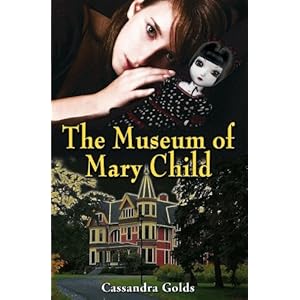
Golds, Cassandra. The Museum of Mary Child. Tulsa, OK: Kane Miller, 2009.
Summary:
Heloise is a child being raised by her stern godmother in the caretaker's house of a museum which lies next door. Her days are strictly structured, and allow no room for fun or free time. She does not know love, the joys of Christmas, or the joys of playing with other children. One day, Heloise finds a doll underneath her floorboards, and develops a fondness for it. Her godmother, however, disapproves and decides to show Heloise the contents of the museum, which contains the disfigured faces of thousands of dolls sewn by Mary Child in her madness. Heloise, aided by a band of birds led by Merryfeathers, escapes from her godmother to be taken in by Old Mother who leads a choir of orphan girls. Heloise begins living a wonderful life, until Merryfeathers takes her to a prison, where she meets Sebastian. They develop a bond and find that they have a mutual connection with Mary Child. Heloise is suddenly found and called back to her godmother who is sick, where she discovers the truth about Mary Child, and the truth about herself.
My Impressions:
This book is a rather dark and strange book, although put together very well. The characters of the story are not developed with much detail, adding to the overall feeling of mystery about the book. In addition, the overall theme of love conquering all is well played throughout the book right through the end. The plot of the story moves along at a steady pace, not so slow that it is dull, but not so quick as to be a rapid page-turner. However, the mysterious air of the plot, the languague that seems to be from the nineteenth century, the fairy tale elements, and the satisfying ends make this book a worthwhile read, especially for females who will most likely receive more enjoyment out of it than males.
Suggestions for the use of this book:
This book is a powerful story and would be an excellent recommendation for any young adult who enjoys mystery. This book could also be used in a lesson on the gothic novel, as it contains many elements of a gothic novel.
Reviews:
Miller, Jessica. Review of The Museum of Mary Child, by Cassandra Golds. School Library Journal, December 1, 2009.
Heloise lives in an austere household with her godmother, always watched, always working, never wasting time. Her life is regimented into segments of work, study, and constitutionals. This is all that the girl knows, until she finds a doll under a loose floorboard in her bedroom. Suddenly her world changes as she discovers what it means to love, but the child knows to keep the toy hidden. When her godmother learns of its existence, she takes her to the Museum of Mary Child to demonstrate the folly and danger of keeping dolls. To the girl's horror, she discovers the place is a shrine to the dolls that a woman named Mary Child had once kept, defaced, and hidden as she slowly went mad. Overcome, Heloise runs away and is taken in by kind Old Mother who runs an all-female choir. There the girl begins to develop loving friendships. Her world is again turned upside down when she is taken by a flock of birds to meet a prisoner in the jail during the dark of night. After several visits to the prison, the two share their stories and discover a deep and intriguing connection between them and Mary Child. This story reads like a fairy tale with elements of mystery, romance, Gothic horror, fantasy, and all parts terrific. The atmosphere is wonderfully rendered, and the book quietly but dramatically draws readers to its conclusion.
Review of The Museum of Mary Child, by Cassandra Golds. Publisher's Weekly, September 28, 2009.
Gothic and wonderfully creepy, Golds's (Clair-de-Lune) atmospheric story delights, offering meditations on the nature and power of love. Lonely Heloise wants only to be loved, but lives as if jailed in the house of her stern and sometimes cruel godmother. One day Heloise uncovers a beautiful doll, Maria, hidden under the floorboards of her room, and it is love at first sight. Heloise hides Maria from her godmother, whose personal Ten Commandments include forbidding play, "pretty clothes" and the possession of a doll, not to mention never uttering the word love ("We are all of us evil. And to love something evil is wicked," she professes). Once Maria is discovered, Heloise finds out the horrible truth about the museum that adjoins her godmother's cottage and is thrust down a strange and magical path that reveals how sheltered she has been ("Most people, she now knew, had heard music. Most people had seen pictures"). Readers will wonder throughout: who is Heloise really-or better, what is she? Aside from an occasional tendency toward sentimental prose, Golds's novel is pure fun, filled with mystery and nearly impossible to put down.
Golds, Cassandra. The Museum of Mary Child. Tulsa, OK: Kane Miller, 2009.
Summary:
Heloise is a child being raised by her stern godmother in the caretaker's house of a museum which lies next door. Her days are strictly structured, and allow no room for fun or free time. She does not know love, the joys of Christmas, or the joys of playing with other children. One day, Heloise finds a doll underneath her floorboards, and develops a fondness for it. Her godmother, however, disapproves and decides to show Heloise the contents of the museum, which contains the disfigured faces of thousands of dolls sewn by Mary Child in her madness. Heloise, aided by a band of birds led by Merryfeathers, escapes from her godmother to be taken in by Old Mother who leads a choir of orphan girls. Heloise begins living a wonderful life, until Merryfeathers takes her to a prison, where she meets Sebastian. They develop a bond and find that they have a mutual connection with Mary Child. Heloise is suddenly found and called back to her godmother who is sick, where she discovers the truth about Mary Child, and the truth about herself.
My Impressions:
This book is a rather dark and strange book, although put together very well. The characters of the story are not developed with much detail, adding to the overall feeling of mystery about the book. In addition, the overall theme of love conquering all is well played throughout the book right through the end. The plot of the story moves along at a steady pace, not so slow that it is dull, but not so quick as to be a rapid page-turner. However, the mysterious air of the plot, the languague that seems to be from the nineteenth century, the fairy tale elements, and the satisfying ends make this book a worthwhile read, especially for females who will most likely receive more enjoyment out of it than males.
Suggestions for the use of this book:
This book is a powerful story and would be an excellent recommendation for any young adult who enjoys mystery. This book could also be used in a lesson on the gothic novel, as it contains many elements of a gothic novel.
Reviews:
Miller, Jessica. Review of The Museum of Mary Child, by Cassandra Golds. School Library Journal, December 1, 2009.
Heloise lives in an austere household with her godmother, always watched, always working, never wasting time. Her life is regimented into segments of work, study, and constitutionals. This is all that the girl knows, until she finds a doll under a loose floorboard in her bedroom. Suddenly her world changes as she discovers what it means to love, but the child knows to keep the toy hidden. When her godmother learns of its existence, she takes her to the Museum of Mary Child to demonstrate the folly and danger of keeping dolls. To the girl's horror, she discovers the place is a shrine to the dolls that a woman named Mary Child had once kept, defaced, and hidden as she slowly went mad. Overcome, Heloise runs away and is taken in by kind Old Mother who runs an all-female choir. There the girl begins to develop loving friendships. Her world is again turned upside down when she is taken by a flock of birds to meet a prisoner in the jail during the dark of night. After several visits to the prison, the two share their stories and discover a deep and intriguing connection between them and Mary Child. This story reads like a fairy tale with elements of mystery, romance, Gothic horror, fantasy, and all parts terrific. The atmosphere is wonderfully rendered, and the book quietly but dramatically draws readers to its conclusion.
Review of The Museum of Mary Child, by Cassandra Golds. Publisher's Weekly, September 28, 2009.
Gothic and wonderfully creepy, Golds's (Clair-de-Lune) atmospheric story delights, offering meditations on the nature and power of love. Lonely Heloise wants only to be loved, but lives as if jailed in the house of her stern and sometimes cruel godmother. One day Heloise uncovers a beautiful doll, Maria, hidden under the floorboards of her room, and it is love at first sight. Heloise hides Maria from her godmother, whose personal Ten Commandments include forbidding play, "pretty clothes" and the possession of a doll, not to mention never uttering the word love ("We are all of us evil. And to love something evil is wicked," she professes). Once Maria is discovered, Heloise finds out the horrible truth about the museum that adjoins her godmother's cottage and is thrust down a strange and magical path that reveals how sheltered she has been ("Most people, she now knew, had heard music. Most people had seen pictures"). Readers will wonder throughout: who is Heloise really-or better, what is she? Aside from an occasional tendency toward sentimental prose, Golds's novel is pure fun, filled with mystery and nearly impossible to put down.
Sunday, March 6, 2011
Module 7: Frindle and Son of the Mob
Citation:
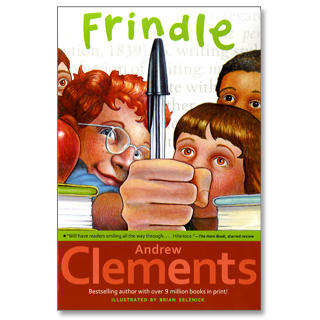
Clements, Andrew. Frindle. New York: Simon & Schuster, 1996.
Summary:
Frindle recounts the story of Nick Allen, a student at Lincoln Elementary School, who decides to see if he can create his own word. His Language Arts teacher, Mrs. Granger, tells the class that words have meanings because people say that they do. Nick Allen puts this to the test by beginning to call pens, frindles. This puts him at odd with his teacher, but gains him the support of the rest of the school and eventually gains nationwide attention. Nick Allen later finds out that, even though she appeared to be against him, Mrs. Granger was supportive of Nick's efforts to create a new word.
My Impressions:
This is an excellent book that speaks to children of pre-Middle School age. The book gives support to children who may not necessarily fit into the common mold with their ideas and imagination. The book is well written, and gives young children the idea that they are able to accomplish something if they try, and that having an imagination is not a bad thing.
Suggestions for the use of this book:
This book could be used in a lesson on the etymology of different words. This is an excellent example of the way in which words are created. This book could also be used by a parent to explain to a child why they do not necessarily get along with their teacher.
Reviews
Review of Frindle, by Andrew Clements. Publisher's Weekly, July 15, 1996.
Always one step ahead of his teachers, Nick not only can "feel a homework assignment coming the way a farmer can feel a rainstorm" but can dream up a distraction to prevent the assignment from being given. In fifth grade, however, he meets his match in tough language-arts teacher Mrs. Granger. Just to get under her skin?nd despite her loud protests?e invents the word "frindle" and convinces the whole school to use it instead of the word "pen." The word spreads to the city, nation and world, and Clements (Big Al) fast-forwards the story by 10 years to show that "frindle" has made it into the dictionary. With this coup Nick gets a big surprise: the proof that Mrs. Granger was rooting for "frindle" all along. Like the Velveteen Rabbit, his well-worn word has become real. Dictionary lovers will cotton to this mild classroom fantasy, while readers who have a hard time believing that one person could invent a word out of thin air will be surprised to learn that the word "quiz" was invented the same way.
Mitnick, Fritz. Review of Frindle, by Andrew Clements. School Library Journal, December 1, 1998.
Nick, a clever fifth grade students, is determined to outsmart his no-nonsense, dictionary-loving teacher, Mrs. Granger. When he invents "Frindle," a new word for pen, he manages to get fellow students and shopkeepers to use the word. Annoyed, Mrs. Granger keeps students who use the new word after school. The war over the word escalates, and first local and then national media pick up the story. Marketing rights to tie-ins (such as pens marked "Frindle") make Nick very wealthy. Ten years later, Nick and Mrs. Granger again correspond when the word "Frindle" is admitted to Mrs. Granger's favorite dictionary. Andrew Clements' story (S&S, 1996) is a fresh take on the classic student-teacher relationship.
Citation:
Korman, Gordon. Son of the Mob. New York: Hyperion, 2002.
Summary:
Vince Luca is a high school student who is the son of a mob boss. Vince, however, has no desire to join the family business, and goes out of his way to avoid "the life." However, Vince's life becomes complicated when he begins dating the daughter of the FBI agent who has the Luca house bugged and under surveillance. Vince also, inadvertantly, gets involved with some of the family's business dealings and winds up in a mess. Vince must maintain his relationship with his family, and his relationship with his girlfriend at the same time, which leads to many complications and ultimately Vince has to compromise.
My Impressions:
This book holds many elements of the reality of being a teenager, including stressful relationships with parents, first love, and striving for independence. This book does an excellent job of placing a teenager into an uncommon situation. While teenage readers will be able to identify with the character of Vince Luca, they will also enjoy the unique situations that he is put into due to his family's connection with the mob. The unique plot, and the realistic dialogue makes this book an excellent choice for young adult readers.
Suggestions for the use of this book:
This would be an excellent book to recommend to a teenage boy who is searching for something to read, particularly if they have trouble understanding Shakespeare's Romeo and Juliet or if they enjoy movies such as the Godfather or TV shows such as the Sopranos.
Reviews
Carstensen, Angela. Review of Son of the Mob, by Gordon Korman. Voice of Youth Advocates, February 1, 2003.
Vince Luca is a recognizable modern teenager-fast-talking, unmotivated, and down on what his father does for a living. When one's dad is the leader of organized crime in New York, living an independent life is a challenge. Although Vince is determined to stay completely separate from the family business, it somehow interferes with every aspect of his senior year, from playing football to homework projects. When Vince falls for Kendra, the daughter of the FBI agent gathering evidence against his father, their relationship seems doomed from the start. Several questions keep the reader hooked. Will Kendra find out why Vince avoids meeting her parents? Will their parents catch them together? What happens if her father succeeds? Is there an FBI mole in the Luca operations? Who ordered the shooting of Mr. Luca's rival? What makes the story work is the hip, young voice of the protagonist. Vince is well aware of the absurdity of his situation and has a wonderfully dry sense of humor. His genuine struggle to find his own way in the face of family influences is appealing and grounds the story. Although this book will be most popular with the junior high crowd, older students who appreciate humorous writing will enjoy the clever twist on a Romeo-and-Juliet relationship. The popularity of HBO's The Sopranos should also serve to increase its audience.
Peters, John. Review of Son of the Mob, by Gordon Korman. Booklist, November 1, 2002.
The Sopranos meets Romeo and Juliet in this briskly comic romance, costarring a crime kingpin's son and an FBI agent's daughter. Tony and Kendra are mad for each other, but that doesn't mean that Tony is ready to tell Kendra who his father is--especially after his horrifying discovery that her father is on the listening end of the bugs and wiretaps scattered through his house. Realizing that it wouldn't be wise for either dad to find out what's what, Tony has to do some fancy footwork to keep the fathers, and Kendra's suspicions, at bay--a task considerably complicated by his unwilling involvement with a pair of petty hoodlums. Stubbornly battling to preserve his illusion that the family "business" has nothing to do with him, Tony presents a winning mix of good instincts and innocence that will have readers cheering him on as he weathers a succession of amatory and ethical crises, to emerge at the end of this expertly plotted escapade with relationships, self-respect, and even conscience more or less intact.
Clements, Andrew. Frindle. New York: Simon & Schuster, 1996.
Summary:
Frindle recounts the story of Nick Allen, a student at Lincoln Elementary School, who decides to see if he can create his own word. His Language Arts teacher, Mrs. Granger, tells the class that words have meanings because people say that they do. Nick Allen puts this to the test by beginning to call pens, frindles. This puts him at odd with his teacher, but gains him the support of the rest of the school and eventually gains nationwide attention. Nick Allen later finds out that, even though she appeared to be against him, Mrs. Granger was supportive of Nick's efforts to create a new word.
My Impressions:
This is an excellent book that speaks to children of pre-Middle School age. The book gives support to children who may not necessarily fit into the common mold with their ideas and imagination. The book is well written, and gives young children the idea that they are able to accomplish something if they try, and that having an imagination is not a bad thing.
Suggestions for the use of this book:
This book could be used in a lesson on the etymology of different words. This is an excellent example of the way in which words are created. This book could also be used by a parent to explain to a child why they do not necessarily get along with their teacher.
Reviews
Review of Frindle, by Andrew Clements. Publisher's Weekly, July 15, 1996.
Always one step ahead of his teachers, Nick not only can "feel a homework assignment coming the way a farmer can feel a rainstorm" but can dream up a distraction to prevent the assignment from being given. In fifth grade, however, he meets his match in tough language-arts teacher Mrs. Granger. Just to get under her skin?nd despite her loud protests?e invents the word "frindle" and convinces the whole school to use it instead of the word "pen." The word spreads to the city, nation and world, and Clements (Big Al) fast-forwards the story by 10 years to show that "frindle" has made it into the dictionary. With this coup Nick gets a big surprise: the proof that Mrs. Granger was rooting for "frindle" all along. Like the Velveteen Rabbit, his well-worn word has become real. Dictionary lovers will cotton to this mild classroom fantasy, while readers who have a hard time believing that one person could invent a word out of thin air will be surprised to learn that the word "quiz" was invented the same way.
Mitnick, Fritz. Review of Frindle, by Andrew Clements. School Library Journal, December 1, 1998.
Nick, a clever fifth grade students, is determined to outsmart his no-nonsense, dictionary-loving teacher, Mrs. Granger. When he invents "Frindle," a new word for pen, he manages to get fellow students and shopkeepers to use the word. Annoyed, Mrs. Granger keeps students who use the new word after school. The war over the word escalates, and first local and then national media pick up the story. Marketing rights to tie-ins (such as pens marked "Frindle") make Nick very wealthy. Ten years later, Nick and Mrs. Granger again correspond when the word "Frindle" is admitted to Mrs. Granger's favorite dictionary. Andrew Clements' story (S&S, 1996) is a fresh take on the classic student-teacher relationship.
Citation:
Korman, Gordon. Son of the Mob. New York: Hyperion, 2002.
Summary:
Vince Luca is a high school student who is the son of a mob boss. Vince, however, has no desire to join the family business, and goes out of his way to avoid "the life." However, Vince's life becomes complicated when he begins dating the daughter of the FBI agent who has the Luca house bugged and under surveillance. Vince also, inadvertantly, gets involved with some of the family's business dealings and winds up in a mess. Vince must maintain his relationship with his family, and his relationship with his girlfriend at the same time, which leads to many complications and ultimately Vince has to compromise.
My Impressions:
This book holds many elements of the reality of being a teenager, including stressful relationships with parents, first love, and striving for independence. This book does an excellent job of placing a teenager into an uncommon situation. While teenage readers will be able to identify with the character of Vince Luca, they will also enjoy the unique situations that he is put into due to his family's connection with the mob. The unique plot, and the realistic dialogue makes this book an excellent choice for young adult readers.
Suggestions for the use of this book:
This would be an excellent book to recommend to a teenage boy who is searching for something to read, particularly if they have trouble understanding Shakespeare's Romeo and Juliet or if they enjoy movies such as the Godfather or TV shows such as the Sopranos.
Reviews
Carstensen, Angela. Review of Son of the Mob, by Gordon Korman. Voice of Youth Advocates, February 1, 2003.
Vince Luca is a recognizable modern teenager-fast-talking, unmotivated, and down on what his father does for a living. When one's dad is the leader of organized crime in New York, living an independent life is a challenge. Although Vince is determined to stay completely separate from the family business, it somehow interferes with every aspect of his senior year, from playing football to homework projects. When Vince falls for Kendra, the daughter of the FBI agent gathering evidence against his father, their relationship seems doomed from the start. Several questions keep the reader hooked. Will Kendra find out why Vince avoids meeting her parents? Will their parents catch them together? What happens if her father succeeds? Is there an FBI mole in the Luca operations? Who ordered the shooting of Mr. Luca's rival? What makes the story work is the hip, young voice of the protagonist. Vince is well aware of the absurdity of his situation and has a wonderfully dry sense of humor. His genuine struggle to find his own way in the face of family influences is appealing and grounds the story. Although this book will be most popular with the junior high crowd, older students who appreciate humorous writing will enjoy the clever twist on a Romeo-and-Juliet relationship. The popularity of HBO's The Sopranos should also serve to increase its audience.
Peters, John. Review of Son of the Mob, by Gordon Korman. Booklist, November 1, 2002.
The Sopranos meets Romeo and Juliet in this briskly comic romance, costarring a crime kingpin's son and an FBI agent's daughter. Tony and Kendra are mad for each other, but that doesn't mean that Tony is ready to tell Kendra who his father is--especially after his horrifying discovery that her father is on the listening end of the bugs and wiretaps scattered through his house. Realizing that it wouldn't be wise for either dad to find out what's what, Tony has to do some fancy footwork to keep the fathers, and Kendra's suspicions, at bay--a task considerably complicated by his unwilling involvement with a pair of petty hoodlums. Stubbornly battling to preserve his illusion that the family "business" has nothing to do with him, Tony presents a winning mix of good instincts and innocence that will have readers cheering him on as he weathers a succession of amatory and ethical crises, to emerge at the end of this expertly plotted escapade with relationships, self-respect, and even conscience more or less intact.
Subscribe to:
Comments (Atom)